
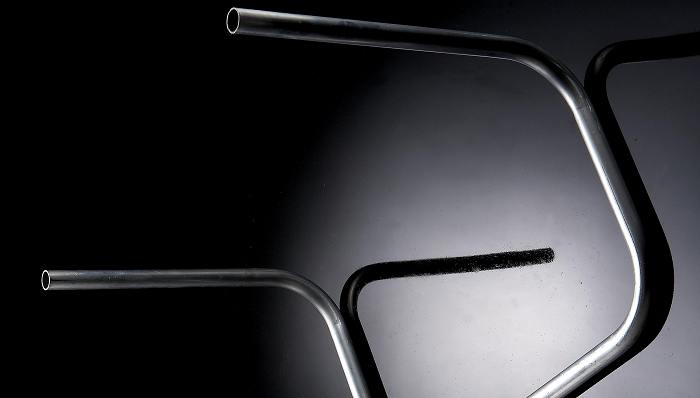
Scrap and waste are among the most costly challenges in tube bending operations. Whether you are running a high-volume production line or handling complex bespoke bends, rejected parts and wasted material directly affect your margins, your lead times, and your competitiveness.
The good news is that most scrap in tube bending is preventable. With the right combination of equipment, programming, tooling, and process controls, manufacturers can significantly reduce material losses and improve first-part accuracy.
In this guide, we look at the main causes of scrap in tube bending, and the practical steps you can take to reduce it.
1. Understand Where Your Scrap is Coming From
Before you can reduce scrap, you need to know what is causing it. Common sources of waste in tube bending operations include:
- Incorrect bend angles or radii, often caused by springback
- Wall thinning or tube collapse on tight-radius bends
- Wrinkles on the inside of the bend
- Ovality (out-of-round cross-sections) on the finished part
- Material off-cuts from inefficient cut lengths
- Trial-and-error set-up bends when changing jobs
Identifying which of these is your primary source of scrap allows you to prioritise corrective action. Many manufacturers find that a large proportion of waste comes from set-up bends and initial programming errors, both of which are highly addressable with modern CNC machinery.
Read: Common Tube Bending Mistakes and How to Avoid Them
2. Invest in CNC Tube Bending Equipment
One of the most impactful ways to reduce scrap is to upgrade to CNC tube bending machinery. Manual and semi-manual machines rely on operator skill and are inherently prone to variability. CNC tube benders store bend programmes digitally, meaning every part is produced to the same specification, every time.
Key advantages of CNC tube bending for scrap reduction include:
- Programmable springback compensation, which automatically adjusts bend angles to account for material behaviour
- Stored programmes for repeat jobs, eliminating set-up errors when returning to a previous specification
- Faster set-up times, reducing the number of trial bends needed before production begins
- Automatic multi-stack tooling on advanced models, allowing multiple bend radii in a single cycle without manual changeovers
At Langbow, we supply the SOCO range of CNC tube benders, which are used across automotive, HVAC, furniture, and industrial manufacturing. These machines are designed to maximise repeatability and minimise material waste.
Explore our full range of CNC tube bending machines or read our guide below:
Read: Optimising Production with CNC Tube Bending Programs
3. Use the Right Tooling for the Material
Incorrect tooling is a leading cause of scrap. Using a die, mandrel, or wiper die that is not matched to your tube material and wall thickness will almost always result in deformation, collapse, or wrinkling.
Key tooling considerations include:
- Bend die: matched to the centreline radius you require
- Clamp die: must grip the tube firmly without marking or distorting it
- Pressure die: controls the material as it feeds through the bend
- Mandrel: supports the inside of the tube wall on tight radii to prevent collapse
- Wiper die: reduces wrinkling on the inner radius, particularly on thin-wall tube
The material you are bending also matters. Stainless steel, aluminium, copper, and mild steel all behave differently under bending loads. Understanding the specific properties of your material and selecting tooling accordingly can dramatically reduce scrap rates.
Read: How Tube Material Affects Bending Performance
4. Optimise Your Cut Lengths
Material waste does not only happen at the bending stage. Off-cuts from inefficient tube lengths can add up significantly over a production run. A few simple practices can help:
- Programme your cut lengths to minimise off-cut waste across your batch sizes
- Use CNC tube saws to cut consistently and accurately, reducing the risk of incorrectly cut material reaching the bender
- Nest multiple parts into a single tube length where your process allows
Pairing a CNC tube saw with your bending operation creates a fully controlled upstream process, ensuring that every tube entering the bender is the correct length and cut squarely.
5. Maintain Your Equipment Properly
Worn or poorly maintained equipment is a silent cause of scrap. As tooling wears, bend accuracy degrades, and parts that previously passed inspection begin to fail. Regular maintenance keeps your machines performing to specification and catches issues before they result in large quantities of rejected parts.
A good maintenance programme for tube bending equipment should include:
- Regular inspection and replacement of worn tooling
- Lubrication of all moving parts on the schedule recommended by the manufacturer
- Checking and adjusting clamp and pressure die settings
- Calibration checks on CNC axes and feedback systems
- Keeping hydraulic systems clean and at correct pressure
Read: What Maintenance Tips Are Important for Tube Bending Equipment?
6. Train Your Operators
Even with the best CNC equipment, operator knowledge remains important. Operators who understand the principles of tube bending, and who know how to interpret and adjust machine parameters, will catch issues early and make better decisions about borderline parts.
Training should cover:
- Reading and interpreting CNC bend programmes
- Identifying early signs of tooling wear
- Understanding springback and how to compensate for it
- Recognising the difference between a tooling issue and a material issue
- Proper tube handling and storage to avoid introducing damage before bending
Langbow provides support and guidance to customers on getting the most from their machinery. Our team has decades of experience in tube bending and is available to advise on process optimisation.
7. Review Your Process Regularly
Scrap reduction is not a one-off project. It benefits from ongoing review. Tracking your scrap rates by job, material, and machine gives you the data to identify trends and act before waste becomes a significant problem.
Consider implementing:
- A simple scrap log that records the cause and quantity of rejected parts
- Regular review meetings to discuss scrap trends and corrective actions
- First-off inspection procedures at the start of each production run
- Statistical process control on high-volume or tight-tolerance jobs
Over time, this approach builds a detailed picture of where your process is vulnerable and gives you the evidence to justify investment in improvements.
Summary
Reducing scrap and waste in tube bending is achievable for most manufacturers. The key steps are:
- Identify the root causes of scrap in your specific operation
- Upgrade to CNC tube bending machinery for consistent, programmable accuracy
- Use the correct tooling for your material and bend radius
- Optimise your cut lengths to minimise off-cut waste
- Maintain your equipment on a regular schedule
- Train your operators to understand the process, not just operate the machine
- Track and review your scrap rates continuously
Together, these measures can make a significant difference to your material costs, your throughput, and the quality of the parts you produce.
Need help reducing scrap in your tube bending operation?
Our team at Langbow is here to help. Whether you need advice on machine selection, tooling, or process optimisation, we have the expertise to support you.
Get in Touch with Langbow Today
Or explore more expert articles at langbow.com/news-and-articles/