
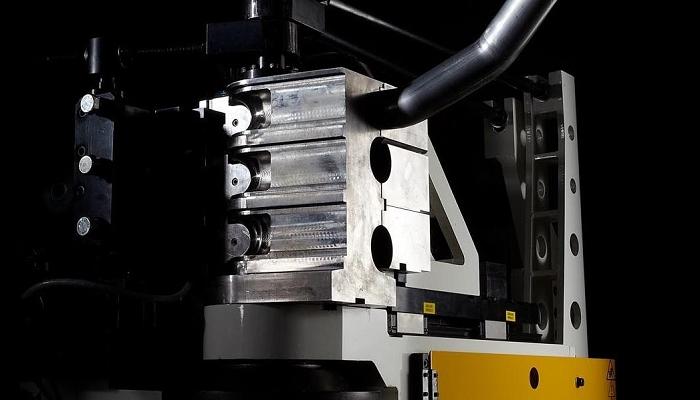
Efficiency, precision, and repeatability are critical to staying ahead. For industries that rely on complex tube fabrication, such as automotive, aerospace, construction, and energy. CNC tube bending programs have become an essential tool for optimising production.
But simply owning a CNC tube bending machine isn’t enough. The real gains come from how effectively you program, integrate, and manage your bending processes. In this article, we’ll explore how CNC tube bending programs can transform your production workflow, and how to get the most out of them.
What Are CNC Tube Bending Programs?
CNC (Computer Numerical Control) tube bending programs are software-driven instructions that control how a tube bending machine operates. These programs dictate every aspect of the bend, including:
- Bend angles
- Rotation between bends
- Feed lengths
- Tooling positions
- Material compensation
By automating these parameters, CNC programs eliminate guesswork and ensure consistent, high-quality results across production runs.
💡 Learn How to Maintain Your CNC Mandrel Bender for Longevity
Key Benefits of CNC Tube Bending Programs
1. Increased Accuracy and Repeatability
Manual bending processes are prone to human error. CNC programs, however, deliver precise, repeatable results every time. Once a program is perfected, it can be reused indefinitely, ensuring uniformity across batches.
2. Reduced Setup Time
With pre-programmed bending sequences, operators can significantly cut down setup times. Instead of recalibrating machines for each job, they can load an existing program and begin production almost immediately.
3. Lower Material Waste
Errors in tube bending often lead to scrap material. CNC programs minimise these mistakes by simulating bends and compensating for factors like springback, helping reduce waste and improve cost efficiency.
4. Enhanced Production Speed
Automation allows for faster cycle times and less manual intervention. This means higher throughput and the ability to meet tight deadlines without compromising quality.
5. Complex Geometry Made Simple
Modern CNC tube bending programs can handle intricate designs that would be difficult or impossible to achieve manually. Multi-radius bends, tight tolerances, and complex shapes become manageable and scalable.
Best Practices for Optimising CNC Tube Bending
To fully leverage CNC tube bending programs, manufacturers should adopt the following strategies:
Invest in Advanced Programming Software
High-quality software enables better simulation, error detection, and optimisation before production even begins. Look for solutions that integrate with CAD systems for seamless design-to-production workflows.
Standardise Your Processes
Creating a library of proven bending programs reduces variability and speeds up future jobs. Standardisation also simplifies training and improves overall operational efficiency.
Train Your Operators
Even with automation, skilled operators are essential. Proper training ensures that staff can troubleshoot issues, optimise programs, and maintain equipment effectively.
Use Simulation and Testing
Before committing to full production, simulate the bending process to identify potential collisions or inaccuracies. This proactive approach saves both time and materials.
Maintain Your Equipment
Regular maintenance ensures that machines perform consistently and that programmed instructions translate accurately into physical bends.
The Role of Data and Integration
Modern manufacturing is increasingly data-driven. Integrating CNC tube bending programs with your wider production systems, such as ERP or MES platforms, can unlock further efficiencies:
- Real-time production monitoring
- Predictive maintenance insights
- Improved scheduling and resource allocation
- Data-backed decision-making
By connecting your bending operations to the rest of your workflow, you create a more agile and responsive production environment.
💡Learn More On CNC Tube Bender vs NC Tube Bender: What’s the Right Choice for Your Business?
Future Trends in CNC Tube Bending
As technology continues to evolve, CNC tube bending is becoming even more powerful. Key trends include:
- AI-driven optimisation for faster programming
- Digital twins for real-time simulation
- Increased automation and robotics integration
- Cloud-based program management
Staying ahead of these developments will be crucial for manufacturers looking to maintain a competitive edge.
Conclusion
CNC tube bending programs are more than just a convenience; they’re a cornerstone of modern, efficient production. By improving accuracy, reducing waste, and enabling complex designs, they help manufacturers achieve higher productivity and better results.
However, the true value lies in how these programs are implemented and optimised. With the right tools, processes, and expertise, businesses can unlock significant gains in performance and profitability.
Ready to Optimise Your Tube Bending Production?
If you’re looking to improve efficiency, reduce waste, and get more from your CNC tube bending operations, Langbow can help. Our expertise in advanced tube bending solutions ensures you get the precision, reliability, and performance your business demands.
Get in touch with Langbow today to discover how we can optimise your production processes and support your growth.