
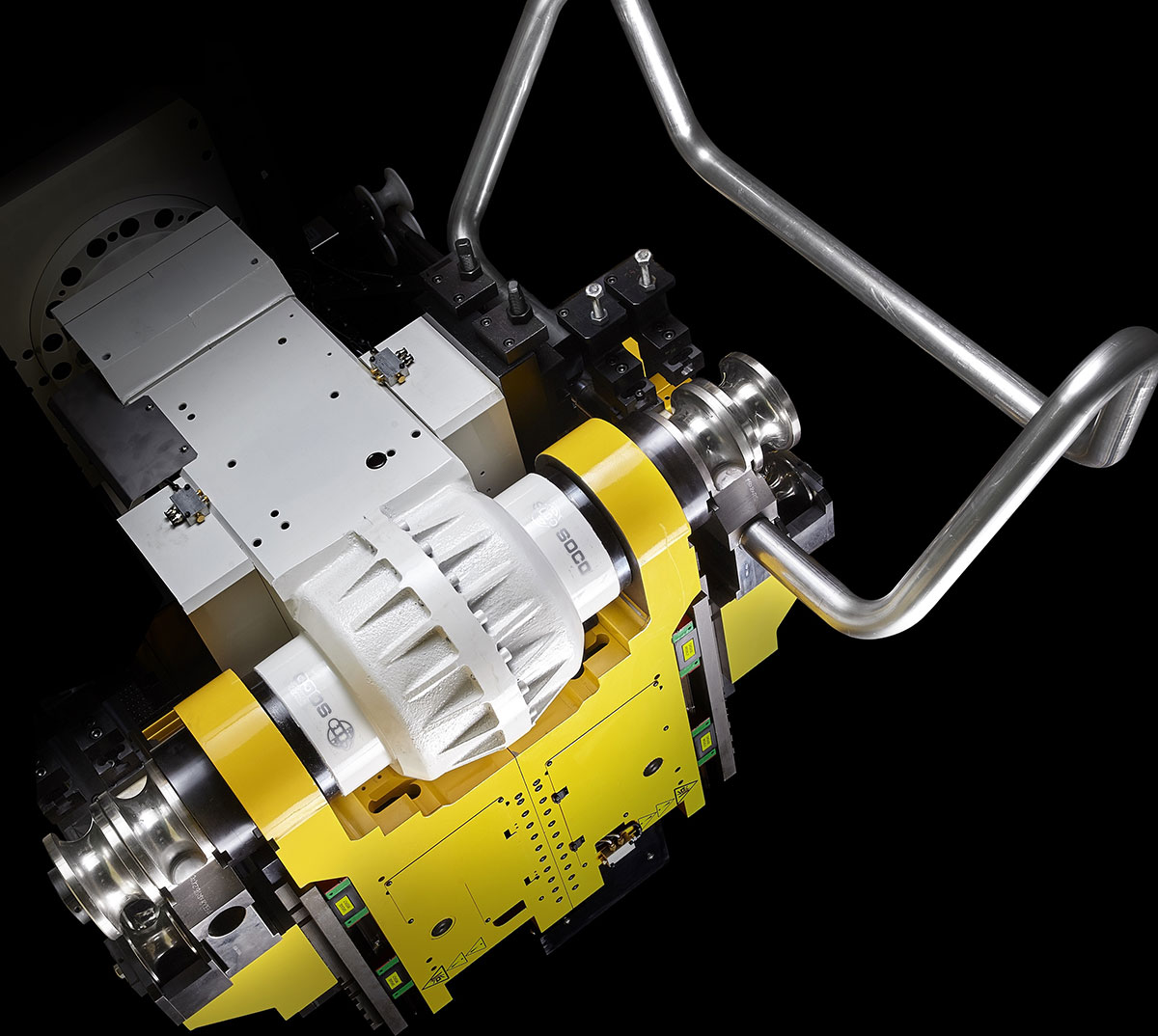
Pick up almost any product with a metal frame, a car exhaust, a handrail, an aircraft fuel line, a bike frame, and there’s a good chance a curved tube is holding it together. Nobody welds dozens of short straight sections to make a curve. It’s far stronger, cheaper, and quicker to bend one continuous piece of tube into shape.
But bending metal without crushing it flat, wrinkling it, or splitting the wall is trickier than it looks. Here’s exactly how the bending of tubes works, the tools and techniques involved, and why the process needs more precision than people expect.
The Short Answer
Tube bending works by forcing a straight length of metal tubing into a curve or angle using dies, clamps, and often an internal support, while carefully controlling how the material stretches on the outside of the bend and compresses on the inside. Get that balance wrong and the tube collapses, wrinkles, or thins out to the point of failure. Get it right, and you end up with a smooth, structurally sound bend that holds its shape.
That’s the one-line version. The real answer involves quite a bit more, so let’s break it down properly.
What Actually Happens Inside the Tube
When you bend a straight tube, you’re not just changing its outer shape. You’re changing the internal stress across the whole cross-section.
- The outer wall of the bend stretches and gets thinner, because it has to cover a longer path around the curve.
- The inner wall compresses and gets thicker, because it’s travelling a shorter path.
- The material along the neutral axis, right through the centre of the tube, stays roughly the same length.
Left unsupported, that uneven stress causes real problems. The outer wall can tear or crack. The inner wall can wrinkle or fold. And the whole tube can flatten into an oval instead of staying round, which is a serious issue if that tube needs to carry fluid, gas, or structural load afterwards.
Here’s a simple way to picture it. Imagine bending a drinking straw with your fingers. If you just fold it, the inside of the bend crumples immediately and the straw kinks shut. Now imagine you could hold the inside of that straw perfectly rigid while you bent it. That’s essentially what industrial tooling does for metal tubes, just with a lot more engineering behind it.
This is why proper tube bending equipment holds the tube firmly against a shaped die, known as a bend die or radius block, which guides the material around a controlled centreline radius (CLR) rather than letting it deform freely.
The Main Tube Bending Techniques
There isn’t just one way to bend a tube. The right method depends on the material, wall thickness, bend radius, and how tight your tolerances need to be. Here are the techniques you’ll come across most often.
Rotary Draw Bending
The tube is clamped against a rotating bend die, and as the die turns, it pulls or “draws” the tube around the radius. This is the most common method for precision work because it produces clean, consistent bends with minimal distortion, and it’s the technique behind most CNC tube bending machines used in aerospace and automotive manufacturing.
Real-world example: an automotive exhaust manufacturer producing thousands of identical exhaust bends a day relies on rotary draw bending because it repeats the same tight-radius bend accurately, batch after batch, without the shape drifting over a production run.
Mandrel Bending
A mandrel, a solid or articulated metal bar, is inserted inside the tube and positioned right at the point where the bend begins. It physically supports the inner wall from the inside, preventing the tube from collapsing or kinking during a tight-radius bend. Mandrel bending is often paired with rotary draw bending for thin-walled tubes where collapse is a real risk.
Real-world example: aircraft hydraulic lines are almost always mandrel bent. The walls are thin to save weight, but the tube still needs to hold its round cross-section perfectly, since even minor ovality can restrict fluid flow or create a weak point under pressure.
Compression Bending
Here, the tube is clamped against a stationary bend die, and a separate block or roller sweeps around the outside of it to form the bend, rather than the die itself rotating. It’s a simpler, often cheaper setup than rotary draw bending, and it works well for symmetrical or straightforward shapes, though it generally can’t match rotary draw bending for tight-radius precision.
Roll Bending
Three rollers, arranged in a triangle, gradually feed the tube through and curve it into a large-radius arc or full coil. Instead of one sharp bend, roll bending builds up a gentle, continuous curve as the tube passes through repeatedly. It’s the technique behind large architectural arches, curved railings, and coiled tubing.
Real-world example: the sweeping curved handrail on a staircase or the rolled tube frame of a piece of furniture is typically produced with roll bending, since the finished shape needs a long, smooth curve rather than a sharp angle.
Ram (Press) Bending
A ram or punch presses the tube into a fixed die to form the bend. It’s one of the simplest and most affordable bending methods, but it offers less control over the tube’s shape and isn’t well suited to tight radii or thin walls, since the tube can flatten under the pressure.
Heat Induction Bending
For thick-walled tubes or very large-diameter pipe, cold bending alone often isn’t practical. Heat induction bending uses an induction coil to heat a narrow band of the tube to a high temperature, softening it just enough to bend with far less force. Once bent, the section is cooled with air or water to lock in the new shape. It’s common in pipeline construction and heavy industrial applications, but it’s rarely needed for the kind of precision tube work most manufacturing businesses require.
The Tooling That Makes It Possible
Bending technique aside, most precision tube bending relies on a similar core set of tooling:
- Bend die: shapes the centreline radius the tube is formed around.
- Clamp die: grips the tube firmly so it doesn’t slip during the bend.
- Pressure die: pushes the tube against the bend die, following it through the bend.
- Wiper die: sits at the tangent point of the bend to smooth out the inner wall and prevent wrinkling, particularly important on tight radii.
- Mandrel: as covered above, supports the tube internally.
CNC tube bending machines coordinate all of this automatically. The operator programs the bend angle, radius, and rotation, and the machine controls clamping pressure, feed speed, and die movement to a level of consistency that’s very hard to match by hand.
Compensating for Springback
One thing that trips up a lot of people new to tube bending is springback, the tendency of metal to spring back toward its original straight shape once the bending force is released. Bend a tube to exactly 90 degrees and let go, and it might settle at 85 degrees instead.
This happens because part of the bend is elastic deformation (which reverses) and part is plastic deformation (which is permanent). Skilled operators and modern CNC software compensate for this by overbending slightly, pushing the tube a few degrees past the target angle so it settles at the correct angle once released. The exact amount of overbend depends on the material, wall thickness, and bend radius, which is why testing and calibration matter for consistent results.
Lubrication and Friction Control
Friction is another factor that quietly affects bend quality. As the tube moves against the dies and mandrel, oil or specialist lubricant is applied to reduce drag, prevent surface scoring, and stop the material from binding or tearing, particularly on tighter radii or harder materials like stainless steel. Skipping lubrication doesn’t just risk a scratched surface finish; it can cause enough resistance to distort the bend itself.
Why the Method You Choose Actually Matters
It’s tempting to think a bend is a bend, but the technique and tooling you choose directly affects:
- Accuracy – how close the finished part matches the design angle and radius.
- Repeatability – whether bend 1,000 looks the same as bend 1.
- Wall integrity – whether the tube keeps its strength, or thins and weakens at the bend.
- Surface finish – critical for visible architectural or furniture applications.
- Cost per part – simpler methods are cheaper per setup, but precision methods reduce scrap and rework.
For industries like aerospace, automotive, and maritime, where tolerances are unforgiving and a failed bend can mean a failed part, rotary draw and mandrel bending on CNC equipment are usually the only realistic options. For architectural and furniture work, roll bending and compression bending often make more sense, since the priority is aesthetic curve rather than tight tolerance.
Final Thoughts
Tube bending works by combining controlled force with the right tooling to guide metal into a curve without losing its shape, strength, or wall thickness along the way. The technique that suits your job, whether that’s rotary draw, mandrel, roll, or compression bending, comes down to your material, your tolerances, and what the finished part needs to do once it leaves the workshop.
Choosing the right machinery is just as important as choosing the right technique. If you’d like to talk through what suits your material, wall thickness, radius, or bend angle, Langbow’s team can help you find the right setup. You can also explore our CNC tube bending machines, our basics of tube bending guide, and more over on our news and articles page.
FAQs
What is the difference between tube bending and pipe bending?
The processes are very similar, but the terms usually refer to different products. Tube is measured by its outside diameter and is common in structural, automotive, and furniture applications, while pipe is measured by its inside diameter and is more commonly used for fluid or gas transport. The bending techniques largely overlap between the two.
What is the minimum bend radius for a tube?
This depends on the tube’s diameter, wall thickness, and material, but a general rule of thumb is that the centreline radius shouldn’t go much tighter than around 1.5 to 2 times the tube’s outside diameter without mandrel support, since tighter bends risk wrinkling or collapse.
Can any metal tube be bent, or does it depend on the material?
Most common metals, including mild steel, stainless steel, aluminium, and copper, can be cold bent successfully. Harder or thicker-walled materials sometimes need heat induction bending or specialist tooling to avoid cracking or excessive springback.
Why does a bent tube sometimes go oval instead of staying round?
This is called ovality, and it happens when the tube isn’t properly supported during the bend, often on tight radii or thin walls. Mandrel support and wiper dies are the main tools used to prevent it.
Do I need a CNC machine for accurate tube bending, or can it be done manually?
Manual and semi-automatic benders can produce accurate bends, but consistency across a production run is much harder to hold without CNC control. If you’re producing high volumes or working to tight tolerances, particularly in aerospace or automotive work, CNC tube bending machines make repeatability far more reliable.