
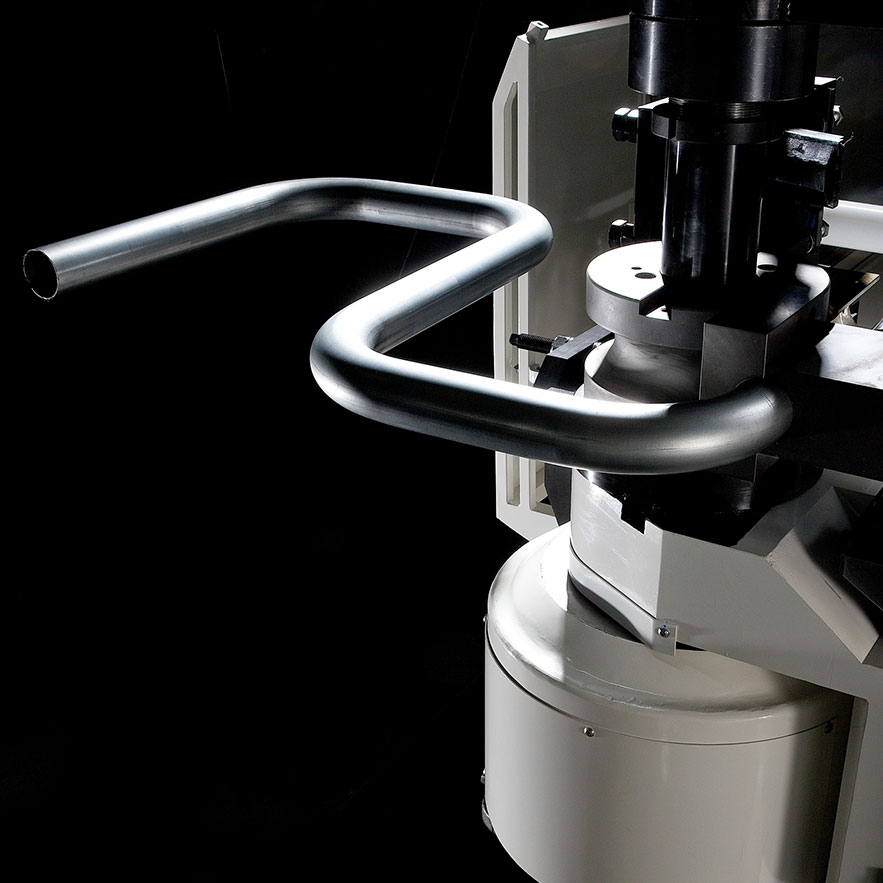
In the world of metal fabrication, precision and efficiency are paramount. When it comes to bending tubes, the right equipment can make all the difference in achieving accurate results.
Tube bending machines come in various types and configurations, each designed for specific applications.
1. Understanding Tube Bending Processes:
Before diving into the selection process, it’s essential to have a basic understanding of the tube bending processes. There are three primary methods: rotary draw bending, roll bending, and compression bending. The choice of the bending process depends on factors such as material, tube diameter, wall thickness, and the desired bend radius.
- Rotary Draw Bending: Ideal for tight-radius bends, rotary draw bending involves a bending die that counteracts the tube’s external force, producing precise and clean bends.
- Roll Bending: Suitable for larger radii, roll bending uses three adjustable rollers to bend the tube gradually. This method is commonly used for creating curves and spirals.
- Compression Bending: This process involves compressing the tube against a forming die, resulting in a bend. Compression bending is often used for larger-diameter tubes and is known for its efficiency in mass production.
2. Material and Tube Specifications:
The type of material being used and the specifications of the tube are critical considerations. Different materials, such as steel, aluminium, and copper, have varying levels of flexibility and strength. Additionally, the tube’s diameter and wall thickness play a role in determining the appropriate bending machine. Ensure that the machine you choose can handle the specific material and tube dimensions required for your project.
3. Machine Configuration:
Tube bending machines come in different configurations, including manual, semi-automatic, and fully automatic models.
- Manual Machines: Suited for small-scale or prototype projects, manual machines require the operator to control the bending process manually. These machines are cost-effective but may not be practical for high-volume production.
- Semi-Automatic Machines: Combining manual and automated features, semi-automatic machines provide a balance between precision and operator control. They are suitable for medium-scale production.
- Fully Automatic Machines: Designed for high-volume production, fully automatic machines can perform multiple bends with minimal operator intervention. These machines are efficient but may be more expensive.
4. Tooling and Accessories:
The availability and versatility of tooling options and accessories can significantly impact the machine’s capabilities. Look for machines that offer a range of tooling options to accommodate different tube sizes and bend radii. Quick-change tooling systems can enhance efficiency by minimising setup time for different tube profiles.
5. Bend Accuracy and Consistency:
Precision is crucial in tube bending, especially for applications where accuracy is paramount. Consider machines that offer precise control over the bending process, ensuring consistent results across batches. Computer Numerical Control (CNC) capabilities can enhance accuracy by allowing for programmable and repeatable bending sequences.
6. Maintenance and Serviceability:
A reliable tube bending machine should be easy to maintain and service. Look for machines with accessible components, clear documentation, and a responsive customer support system. Regular maintenance is essential to ensure the longevity and optimal performance of the machine.
7. Budget Considerations:
While it’s tempting to opt for the most advanced and feature-rich machine, it’s crucial to align your choice with your budget constraints. Evaluate the cost of the machine, including any additional tooling and accessories, and consider the long-term return on investment based on your production needs.
Final Words from Tube Bending Specialists
Choosing the right tube bending machine is a critical decision that can significantly impact the efficiency and quality of your metal fabrication processes.
Invest the time in research and consultation to ensure that the chosen machine aligns with your production goals and contributes to the success of your metal fabrication projects.
For help and advice on choosing the right tube bending machine, please get in touch.